From Farm to Auction:
Our Commitment to Transparency
As a premier fur auction house, we understand that today's consumers demand more than just quality; they demand integrity. The journey from the farm to the auction block is built on a foundation of strict animal welfare, scientific research, and transparent practices. Here is how we ensure excellence at every step.
Pioneering Animal Welfare Standards
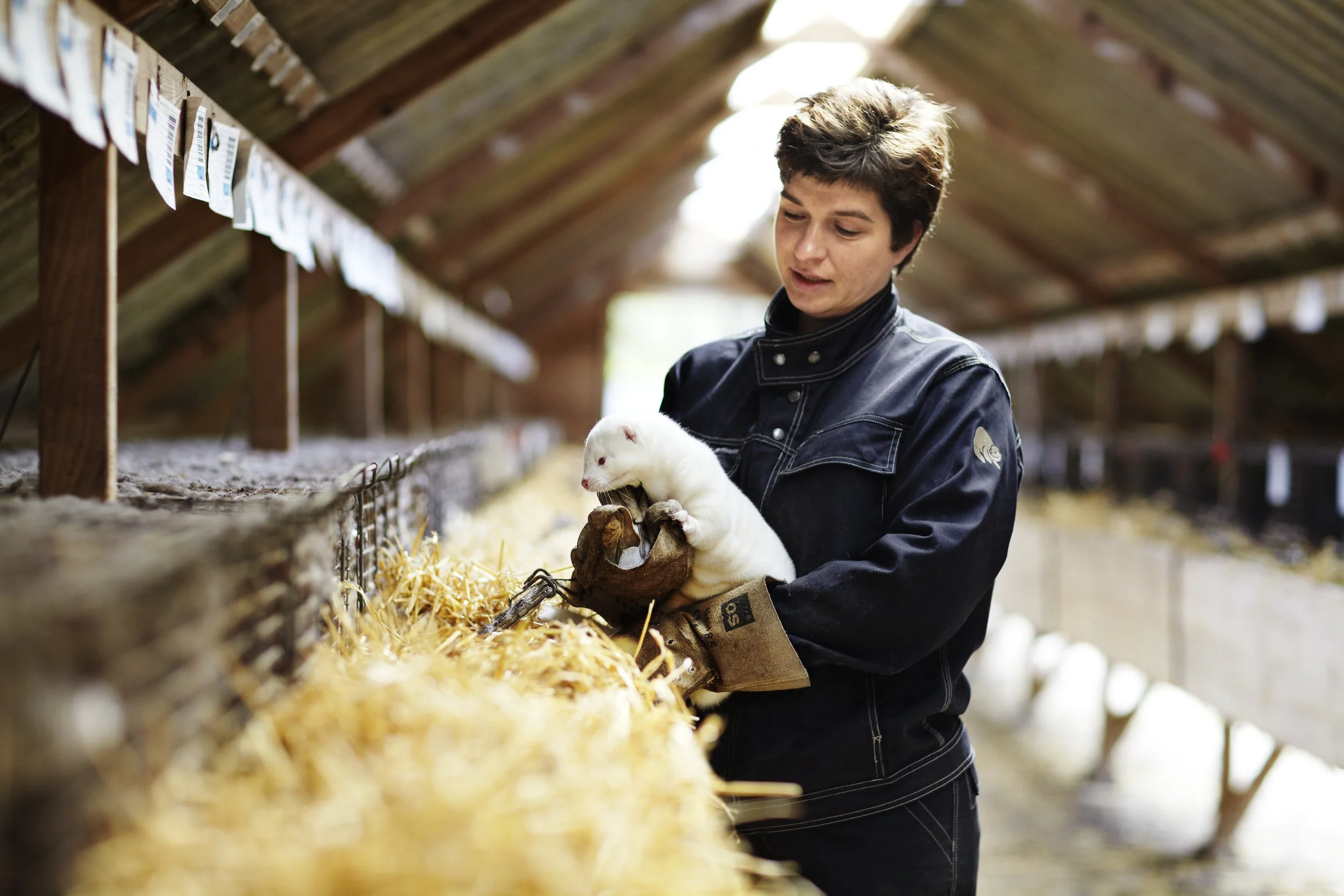
We take pride in our history of leadership. As early as 1985, our industry established the first animal‑welfare guidelines for fur animals—long before such standards existed for other livestock. Today, our protocols, developed in collaboration with the Danish Animal Welfare Society, are even stricter than general European regulations.
Transparency means accountability. Every farm under our umbrella undergoes a mandatory annual veterinary inspection to check for health and welfare concerns. Additionally, the Danish Veterinary and Food Administration conducts regular audits.
Science-Backed Research & Development
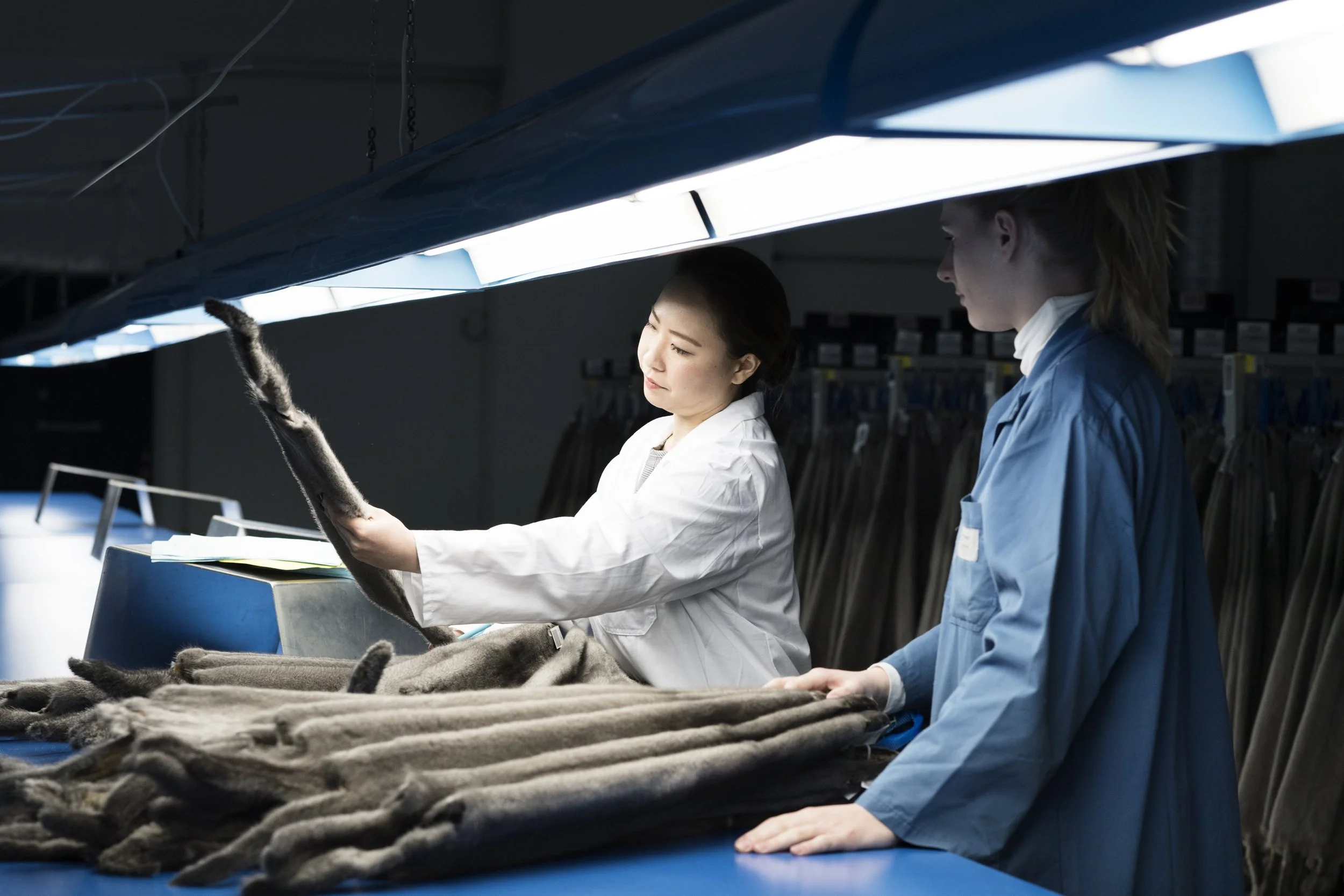
Kopenhagen Fur puts a priority on staying up‑to‑date on the newest developments in fur through an array of comprehensive research activities. Areas of research include animal welfare, animal health, feed, environmental conditions, product quality, breeding, and management. In doing so, fur breeders are able to continuously optimize conditions, breeding the healthiest animals in the most appropriate manner.
Furthermore, Kopenhagen Fur co‑sponsored a series of research activities at the Faculty of Life Sciences at the University of Copenhagen and the Faculty of Agricultural Sciences at Aarhus University. Kopenhagen Fur also actively supported the EU Animal Welfare Quality project, which aims to create a livestock labeling system. This guarantees that the animal‑welfare credentials of our products are verified by certified assessments, giving you clear assurance.
Transparency also means respecting nature. Our farming follows the natural biological rhythms of the mink.
Natural Mating
The mating season starts at the beginning of March and lasts about two weeks. The females are mated twice, with the heat cycle carefully controlled by natural light conditions. Minks differ from other animals in that the act of mating itself initiates ovulation. Nine days after the first mating, a new set of eggs appears in the ovaries.
Pregnancy
Unlike other animals, the duration of pregnancy for minks can vary from 40 to 70 days because embryonic development does not begin until the eggs appear. Once this occurs, the pregnancy lasts an additional 30 days.
Good Start for Kits
The birth period normally takes place between the 25th of April and the 10th of May. In large litters with more than 8 to 9 kits, it can be necessary to cross‑foster some of the kits to other dams, because a dam can have difficulty caring for a large litter properly. Dams with small litters can easily adopt extra kits from larger litters.
When the kits are four weeks old, feeding on the lid of the nest box is initiated. This speeds up the kits’ ability to learn how to eat on their own, thus taking pressure off the dam. Later on, the kits must also learn how to drink from the farm’s regular watering system.
Life Cycle
Once they are 8 weeks old, the kits are weaned from their dam. Around the 1st of July, the kits are then paired off, female and male, in order to ensure normal behavioural development. By the end of August, the physical development of the mink is more or less complete, and continued weight gain consists primarily of fat.
The selection of animals for the following year’s breeding stock begins at the end of October. This is when the animals’ size, behaviour, health, and pelt quality are evaluated. Animals not selected for breeding are pelted. The pelting season begins in November/December.
During the pelting process, the skin is prepared in such a way that it can keep for up to a year without being dressed. The skins are placed on drying boards to maintain their shape during the drying process. The rest is recycled for use in the production of bio‑diesel, among other things.